Case Studies
Plugzmart
Real Business Challenges. Practical Solutions. Successful Digital Transformation.
Company Overview
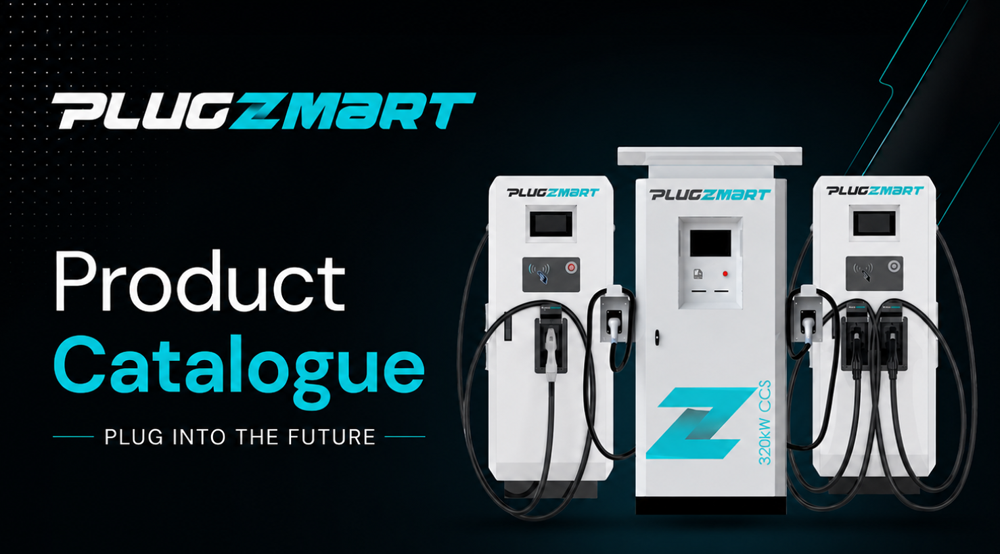
Plugzmart is an EV charging solutions provider, supplying and supporting charging infrastructure for residential, commercial, and public-use installations. As the EV market has grown, so has Plugzmart’s customer base — and with it, a steady stream of installation queries, technical support requests, and maintenance issues that needed a reliable way to reach the right team.
Business Background
Customer support sits close to the core of Plugzmart’s business. Charging equipment is safety-critical and often installed at a customer’s home or business, so support requests need to be tracked carefully, routed to the right specialist, and closed out within a predictable timeframe. As the company scaled, the informal way support had been handled — a shared inbox and manual tracking — was no longer keeping up.
Business Challenges
Challenges Plugzmart Was Facing
- Customer queries arriving through multiple, disconnected channels (email, phone, walk-in)
- Manual ticket tracking with no single source of truth
- No centralized support platform for the team to work from
- Difficulty assigning tickets to the right technician or department
- No SLA tracking, so response and resolution times varied widely
- Delayed customer responses during busy periods
- Little to no visibility into overall support performance
Business Requirements
Plugzmart wanted a system that would bring every support request into one place, route it automatically, and give managers a clear view of how the team was performing. The core requirements were:
A centralized ticketing system for all customer queries
Email-to-ticket automation so nothing gets missed
Department-wise ticket routing
Automatic ticket assignment based on rules
Priority management for urgent and safety-related issues
SLA management with escalation on breach
A self-service Knowledge Base for common questions
User roles and permissions across teams
A Customer Portal for ticket visibility and self-service
A reporting dashboard for management
Requirement Analysis & Solution Design
We ran structured discovery sessions with Plugzmart’s support leads and department heads to map how tickets actually moved through the business — where they came from, who needed to see them, and what “resolved” meant for different issue types. These requirements were then mapped against Zoho Desk’s capabilities. Zoho Desk was selected as the platform because it natively covers multi-channel ticketing, SLA and assignment automation, a branded customer portal, and reporting — without requiring custom development for Plugzmart’s core needs.
Implementation Process
Zoho Desk environment setup and department creation
Custom ticket layouts for different request types
Email channel integration for automatic ticket creation
Assignment rules and workflow automation
SLA policies with escalation paths
User roles, profiles, and permission settings
Notification automation for agents and customers
Knowledge Base setup and initial article authoring
Customer Portal branding and configuration
System testing and User Acceptance Testing (UAT)
End-user training for agents and team leads
Go-live, followed by hypercare support
Challenges Faced During Implementation
Early on, agents were used to working out of a shared inbox, so adopting a structured ticket workflow took some adjustment — this was addressed with short, role-specific training sessions rather than one generic walkthrough. Getting SLA timers to reflect real-world urgency (a safety issue versus a general query) also took a few rounds of tuning after go-live, resolved through close hypercare support in the first weeks.
Business Outcome
Results After Go-Live
- Faster ticket resolution through automated routing and SLA escalation
- Improved customer satisfaction from consistent, timely responses
- Full visibility into support performance through dashboards
- Reduced manual work for the support team
- A standardized, repeatable support process across departments
- Higher overall team productivity
Lessons Learned
The Plugzmart engagement reinforced a pattern we see across support-focused implementations: the technical configuration is usually the easier half of the project. The harder, more valuable work is getting SLA rules and routing logic to genuinely reflect how the business operates, and giving agents enough hands-on training that the new system feels like less work, not more.